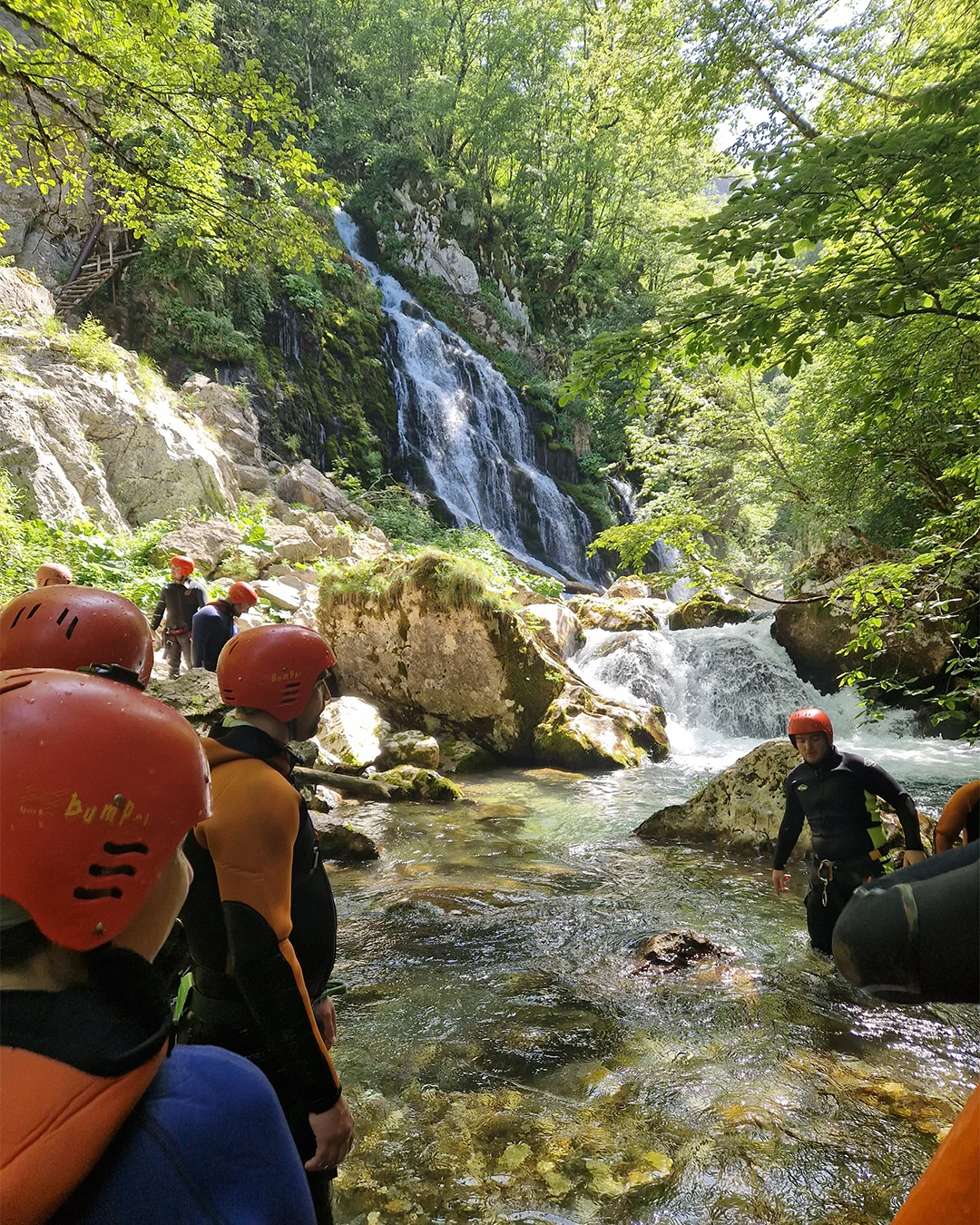
Not every trip labelled as adventure actually delivers one. Too often it becomes crowded, controlled, and far from real wilderness. Hrčavka is different: cold water, narrow stone, waterfalls, and a route that still feels hidden inside the mountains of Sutjeska National Park.
If you are ready for a real adrenaline day, this guide covers the essentials: what makes Hrčavka the standout canyoning route in Bosnia and Herzegovina, what happens inside the gorge, how to choose a safe operator, what gear you need, and how to build a wider Sutjeska itinerary around the experience.
Why Hrčavka is Bosnia's best canyoning spot
Canyoning means moving through a river canyon from point A to point B by walking, climbing, jumping, sliding, swimming, and descending obstacles with rope where needed. Bosnia and Herzegovina has several dramatic gorges, but the Hrčavka canyon stands out because it combines technical variety with a true wilderness setting.
The river cuts through the protected landscape of Sutjeska National Park, Bosnia and Herzegovina's oldest national park. Once you enter the canyon, the outside world drops away quickly: forest above, limestone walls around you, and cold mountain water underfoot.
The route is known for:
- Waterfalls: Guides use professional rope systems for controlled descents beside cascades and vertical rock sections.
- Emerald pools: Clear water gathers in deep basins, creating safe landing zones for optional jumps.
- Natural slides: Fast water has polished sections of stone into smooth natural chutes.
- Untouched wilderness: Because the route sits deep inside the national park, the canyon still feels raw, quiet, and protected.
How it compares to other Bosnian canyons
Travelers looking across Bosnia and the wider Balkans often hear about canyons such as Rakitnica or Mostarska Bijela. Those places are beautiful, but they can require demanding approaches or become dry during parts of late summer. Hrčavka usually keeps a reliable summer flow and offers a continuous mix of rope work, slides, swims, and jumps.
That combination makes it one of the most dynamic canyoning experiences in the country, especially for people who want a guided adventure that feels remote without needing previous climbing experience.
What to expect in the canyon
The Hrčavka descent is usually a half-day canyoning experience, with around 3 to 5 hours spent inside the gorge depending on the group and conditions. The difficulty is moderate: you do not need prior canyoning or climbing experience, but you should be comfortable swimming, moving over uneven rock, and listening closely to your guide.
The day starts with a safety briefing and gear fitting. Guides explain how to move through current, how to jump safely when a jump is part of the route, and how to use rope-assisted sections. Once the group enters the water, the route builds gradually through boulders, narrow passages, waterfalls, cold pools, and polished stone slides.
Not every obstacle has to be done the most intense way. The bigger jumps are optional, and guides can show alternative lines when possible. The best trips are not about proving anything; they are about moving through the canyon safely while still feeling the full force of the place.
Best canyoning tours and operators
Hrčavka should not be treated like an ordinary hiking trail. The canyon involves cold water, slippery rock, rope systems, changing conditions, and sections where professional judgement matters. Going without licensed guides and proper equipment is dangerous.
Our Hrčavka canyoning tour is built around small groups, certified local guides, and the logistics needed to run the route cleanly from start to finish. We know the entry and exit points, the safe lines through each obstacle, and the conditions that change after rain, heat, or high water.
- Certified guides: Trips are led by experienced guides who work with international guests and professional canyoning equipment.
- Small-group logistics: Smaller groups make the route safer, calmer, and more personal.
- Local base: Camp Nomad keeps you close to Sutjeska, the canyon approach, and other outdoor routes in the Foča region.
Prices, gear, and safety
The water in Hrčavka is alpine cold, often sitting around 7 to 10 degrees Celsius even in summer. Proper canyoning gear is not optional; it is the difference between a hard, safe adventure and a miserable one.
A realistic price for a full guided Hrčavka experience is usually around EUR 90 to EUR 140 per person, depending on group size, season, inclusions, transfers, and whether meals or extra logistics are part of the booking. Good operators include the essential equipment in the tour price.
- Usually provided: Neoprene wetsuit, neoprene boots, helmet, buoyancy aid, canyoning harness, ropes, safety systems, and guide support.
- Bring with you: Swimsuit for under the wetsuit, towel, dry clothes, and dry shoes for after the canyon.
- Helpful extras: Water bottle, sunscreen for before and after the route, and cash for meals or personal expenses.
For more route-specific details, our earlier field note Hrčavka Canyoning: Sutjeska's Wild Heart covers the feeling of the descent, group size, season, and what the day looks like from camp.
How to prepare and where to stay
You do not need to train like an athlete, but you should be a confident swimmer with enough fitness for several hours of active movement. Expect cold water, uneven terrain, short climbs, swims, and moments where you need to stay focused while guides manage the group through obstacles.
The best season usually runs from mid-June through September, when warm air makes the cold river feel refreshing instead of punishing. July, August, and September are especially good for travelers combining canyoning with rafting, hiking, or a wider Bosnia and Herzegovina route.
For accommodation, we recommend staying close to the canyon rather than driving in from a distant city hotel. Camp Nomad gives you a simple, comfortable outdoor base near Sutjeska, with space to rest after the descent and easy access to other mountain activities.
Itinerary ideas for Sutjeska
Canyoning Hrčavka fits best as part of a multi-day wilderness trip. Sutjeska National Park and the surrounding Foča region are packed with demanding outdoor experiences, so leave room for recovery instead of stacking every hard activity back to back.
- The adrenaline sandwich: Raft the Tara River on day one, rest at Camp Nomad on day two, then enter Hrčavka canyon on day three.
- Peaks and pools: Hike to Trnovačko Lake or climb Maglić, take a recovery day, then cool off in the pools and waterfalls of Hrčavka.
- Active Bosnia route: Start with canyoning in Sutjeska, then continue toward rafting, Mostar, waterfalls, and cultural stops from our Top 10 Activities in Bosnia and Herzegovina guide.
Planning your next step
Hrčavka delivers the mix people hope for when they book an adventure in the Balkans: waterfalls, cliff jumps, rope descents, emerald pools, and the feeling of being deep inside a protected mountain landscape. The logistics, gear, and safety systems are handled by the guides. Your job is to show up ready to move, listen, and enjoy the wild part.
For questions about dates, group size, transfers, or where to stay, head to our contact page or message us directly on WhatsApp. We will help you choose the right day and build the trip around the conditions.