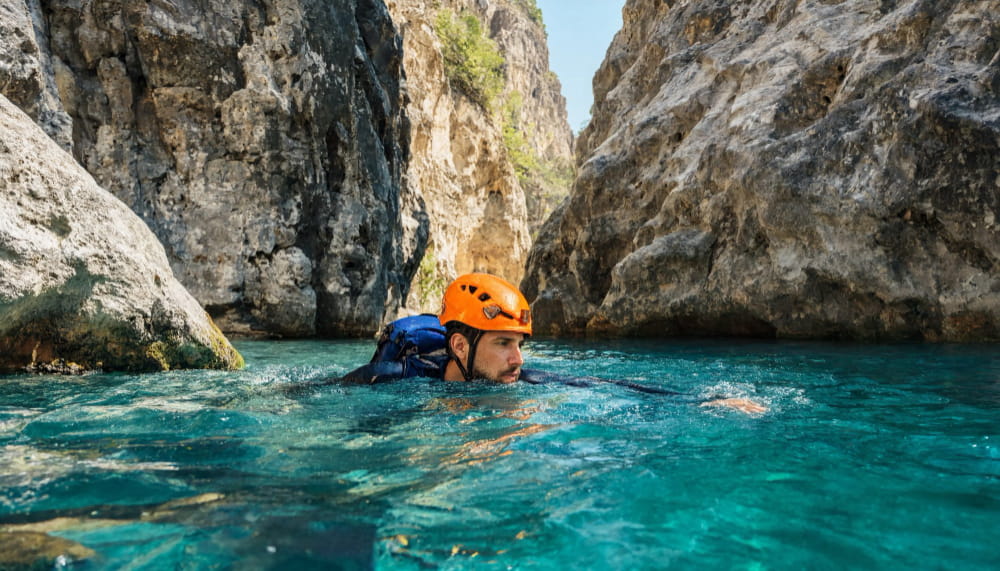
"Canyoning" and "canyoneering" are frequently used interchangeably to describe the exact same sport. The difference between the two terms is predominantly a question of geography and cultural preference, rather than a difference in the activity itself.
Canyoning is an adventure sport that involves travelling down a watercourse or narrow gorge using a combination of techniques, including walking, scrambling, climbing, jumping, abseiling and swimming. The sport takes place in wild, water-carved terrain that is often inaccessible by any other means.
The geographical and cultural divide
"Canyoning" is the globally recognised standard term, used extensively across Europe, Asia and the rest of the world. In contrast, "canyoneering" is the popular terminology utilised almost exclusively in the United States and Canada. The sport's origins trace back to Europe, specifically France, where explorer Edouard-Alfred Martel conducted the first documented scientific descent of a canyon in 1905. As the sport developed across France, Spain and Italy over the following decades, the term "canyoning" became deeply rooted in European outdoor tradition.
When the activity eventually gained traction in the American outdoor scene, it was adapted to the local culture and dubbed "canyoneering". Depending on the region, the exact same sport goes by other names entirely. It is known as "river tracing" in parts of Asia, "kloofing" in South Africa and "barranquismo" in Spanish-speaking countries. Regardless of the name, the core activity involves the same descents and relies on the same fundamental gear.
The technical distinction: wet canyons vs dry canyons
While commonly used as synonyms in everyday language, a nuanced technical distinction exists within the expert community based on the specific canyon environment. "Canyoning" is specifically used by technical practitioners to describe descending canyons with flowing water. European canyoning heavily emphasises this aquatic thrill, requiring participants to swim through emerald pools, slide down natural rock toboggans and jump off waterfalls. Conversely, "canyoneering" technically refers to the descent of dry canyons without flowing water, an environment typical of the American Southwest deserts like Utah or Arizona.
Navigating wet canyons (canyoning)
Wet canyons, the domain of traditional European canyoning, are characterised by flowing water, lush vegetation and slippery rock surfaces. Navigating these aquatic environments requires specialised skills to handle the constant presence of moisture.
- Water dynamics: participants must learn to read water features, understand current dynamics and negotiate both vertical and horizontal water movements.
- Aquatic obstacles: technical moves often involve swimming through deep pools, executing natural water slides and rappelling directly down the face of active waterfalls.
- Environmental hazards: moving water increases exposure to specific hazards, particularly hypothermia and drowning. Waterfalls present challenges due to strong currents, while pools of water may conceal hidden hazards or submerged obstacles. Flash floods are a significant risk, and damaged anchors from previous floods are common.
Navigating dry canyons (canyoneering)
Dry canyons present a completely different set of environmental challenges. Found predominantly in arid regions with minimal water flow, these canyons feature dry rock surfaces and sparse vegetation.
- Technical climbing: dry canyons demand more technical climbing, complex route finding, pothole escapes and advanced anchor building.
- Movement techniques: navigating these rugged landscapes requires executing precise downclimbs, stemming techniques and partner-assisted manoeuvres.
- Environmental hazards: canyoneers face obstacles such as loose rocks, extreme temperatures from direct sun exposure, and a heavy reliance on climbing techniques and agility rather than swimming. The absence of water leads to increased exposure to heights and a strict reliance on solid anchor points for rappelling.
Equipment disparities
The presence or absence of water dictates the necessary equipment for the descent. In wet canyons, thermal protection is a critical safety measure. Participants must wear thick neoprene wetsuits, typically 5mm to 7mm, designed specifically for the sport with reinforced knees and elbows. Additional essential gear includes neoprene socks, specialised canyoning boots built for wet-rock traction, a certified climbing helmet, a buoyancy aid and a harness featuring a protective seat patch to guard against friction on rock slides. Because of the swift water, ropes are generally static or semi-static and designed to resist water absorption.
In dry canyoneering, the focus shifts away from thermal water protection and more toward extensive rope work, static ropes and managing heat exposure. Participants typically wear lightweight, quick-drying clothing and rely on standard climbing harnesses and hardware suited for heavy abrasion against dry sandstone or granite.
Choosing your destination
When planning a trip, understanding this terminology ensures you book the correct experience. If you are anywhere in Europe, "canyoning" is the absolute standard, and the activity will involve a highly aquatic environment. France alone has more than 2,000 mapped canyons, and the sport is highly popular across Switzerland, Austria, Spain and the Balkans. If you are booking a tour in the United States, "canyoneering" is the term to look for, and you should prepare for a drier, more climbing-focused descent.
Bosnia and Herzegovina sits firmly within the European wet-canyoning tradition. The region features spectacular, untouched canyon terrain carved by glacial rivers. Sutjeska National Park contains some of the least-visited and most intact canyon terrain in Europe, situated near one of the continent's last remaining primary rainforests. The Hrčavka Canyon exemplifies authentic European canyoning, offering deep emerald pools, natural slides and technical rope descents through rushing waterfalls. This location provides an incredibly wild and untouched environment where the water stays refreshingly cold, averaging around 10°C even in the summer. For travellers planning a comprehensive adventure in the region, visitsutjeskanationalpark.com offers essential resources for accommodation and access to further outdoor activities in this pristine landscape.
Whether you seek the sheer, dry drops of the American Southwest or the lush, aquatic gorges of the Balkans, understanding the subtle differences between canyoning and canyoneering prepares you for the specific challenges of your descent. The activity is identical at its core, and the canyon itself does not care what you call it.