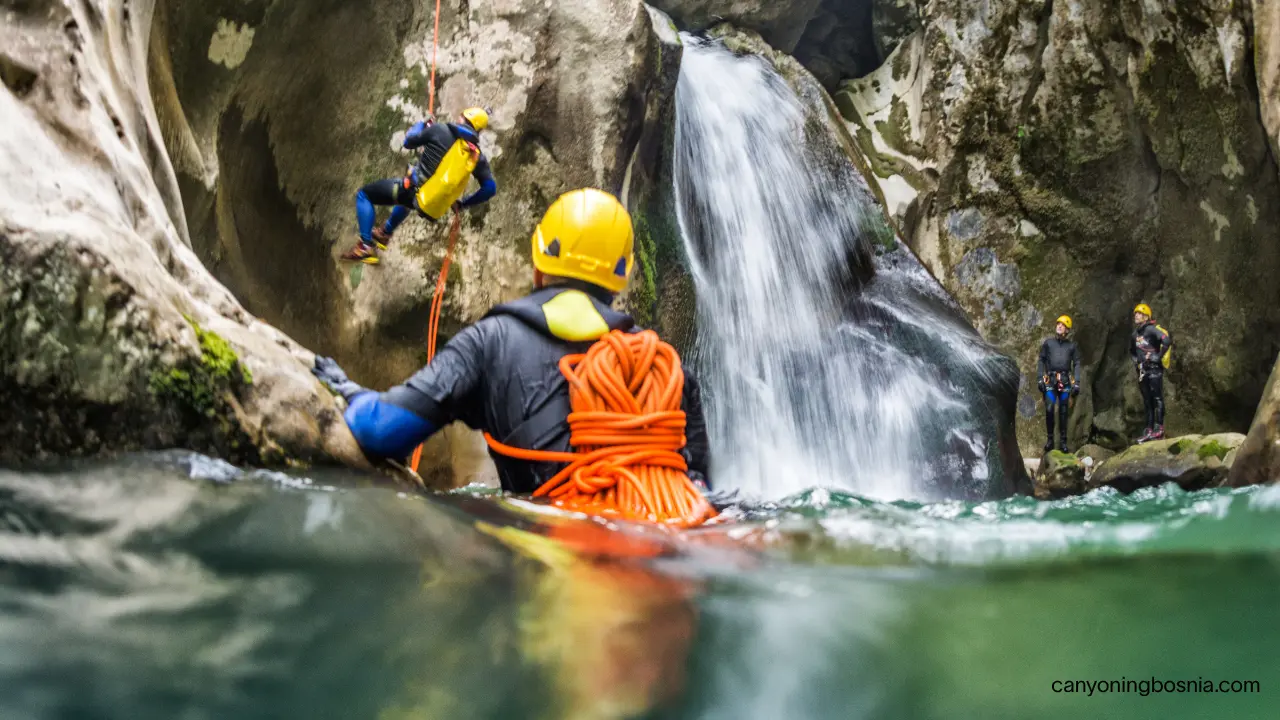
Three of the best-known canyons in and around Bosnia and Herzegovina, three very different days out. One is built for first-timers and families, one is a long cold-water test for experienced adventurers, and one is a bucket-list slot canyon just across the border in Montenegro. Here is how they actually compare, and how to pick the right one.
If you have typed "canyoning Bosnia" into a search bar, you have probably run into the same three names again and again: Hrčavka, Rakitnica and Nevidio. They get lumped together as if they were interchangeable. They are not. The difficulty, the drive, the season and the kind of person each one suits are genuinely different, and choosing badly is the difference between the best day of your trip and a cold, frightening slog you were not ready for.
We guide in Hrčavka, inside Sutjeska National Park, so we will be upfront: for most visitors, Hrčavka is the one to do first. But you deserve the honest version of all three, so that is what this is. Here is the short answer, then the detail.
The quick verdict
- Choose Hrčavka if it is your first canyon, you are travelling with family or mixed-ability friends, or you want the most reward for the least logistics. Beginner-friendly, guide-led, inside a national park.
- Choose Rakitnica if you are fit, experienced, tolerant of cold water and want a long wilderness route with real commitment. This is a step up, not a starter.
- Choose Nevidio if you want an iconic, narrow slot canyon and do not mind an international border crossing and a longer day. It is in Montenegro, not Bosnia, and runs only a short summer window.
Side by side
Figures for canyons vary a lot between sources, so treat the numbers below as well-researched estimates rather than surveyed measurements. Where a claim is commonly repeated but hard to verify, we have softened it in the notes.
| Feature | Hrčavka | Rakitnica | Nevidio |
|---|---|---|---|
| Country / area | Bosnia, Sutjeska National Park | Bosnia, near Konjic (protected Nature Monument) | Montenegro, Durmitor area (UNESCO region) |
| Nearest town | Tjentište / Foča | Konjic | Šavnik |
| Difficulty | Moderate, guide-led (graded V3·A4) | Demanding, technical, long | Medium, jump-and-swim slot |
| Drive from Sarajevo | ~100 km, about 2 hrs | ~1 hr via Konjic | ~180 km, 3.5 hrs+ with border |
| Season | May–October | May–October | July–September only |
| Water temp | 4–9 °C | Cold, wetsuit essential | ~7–10 °C |
| Jumps | Up to 5 m (optional) | Varies by route | Highest ~7–8 m (avoidable) |
| Best for | Beginners, families, first-timers | Fit, experienced adventurers | Fit adventurers wanting an iconic slot |
| Signature feature | Perućica primeval forest, waterfall exit | One of Europe's deepest gorges | The 25 cm-wide "Kamikaze Gate" |
Hrčavka: the one to do first
The Hrčavka is a tributary of the Sutjeska river, cutting a narrow limestone gorge entirely inside Sutjeska National Park, Bosnia's oldest national park. The canyoning section is short and dense with variety: natural slides polished by centuries of meltwater, optional jumps up to about five metres, a controlled rappel beside a waterfall, a few swims and a couple of narrow sections where the walls close overhead.
Operators here grade the classic route V3·A4, which in plain terms means the ropework is moderate but the canyon is genuinely aquatic and cold. The water sits around four to nine degrees even in August, which is why a proper wetsuit is non-negotiable rather than optional. That cold is a feature, not a flaw: it comes from the catchment of Perućica, one of the last two primeval forests in Europe, which keeps the water startlingly clear.
What makes Hrčavka the right first canyon is the balance. It has enough jumps, slides and rappels to feel like a real adventure, but the difficulty is managed by guides rather than dumped on you. Rappelling is taught on a dry practice wall before you commit to anything. If you can swim and follow instructions, you can do it, which is exactly why it works for families and mixed groups where not everyone is a hardened adrenaline seeker.
The logistics are also the friendliest of the three. Sutjeska sits roughly 100 kilometres from Sarajevo, about two hours by road, with Mostar a similar distance and Dubrovnik a bit further. No border, no epic pre-dawn start.
If you want the full breakdown of gear, prices, itinerary and what a day actually looks like, read our Ultimate Guide to Canyoning Hrčavka, or if you are completely new to the sport, start with our practical beginner's guide. When you are ready to book, everything runs from our base at Camp Nomad in Sutjeska.
Rakitnica: the serious step up
Rakitnica is a different animal. The river carved a long canyon between the Bjelašnica and Visočica mountains, dropping through a gorge often described as one of the deepest in Europe, with walls plunging hundreds of metres below the rim. The village of Lukomir, Bosnia's highest permanently inhabited settlement, sits on the edge of it.
Where Hrčavka is a compact vertical playground, Rakitnica is about distance, commitment and cold. It involves far more swimming, floating, scrambling and crawling than it does rappelling, and once you are committed there is essentially no exit until the canyon opens out. The water is famously cold, clear enough to drink straight from the river, and the route rewards fitness and cold tolerance over technical rope skills.
It is closer to Sarajevo than Hrčavka in raw distance, tours usually stage from Konjic, but do not let the proximity fool you into thinking it is easier. This is a route for people who already know they love canyoning and want a genuine wilderness day, not a first outing.
Nevidio: the iconic cross-border classic
Nevidio is the famous one, and the catch is that it is not in Bosnia at all. It sits on the Komarnica river on the southern slopes of Durmitor in Montenegro, inside a landscape linked to the Durmitor UNESCO World Heritage area. Reaching it from Sarajevo means an international border crossing and a longer day, realistically three and a half hours or more of driving each way.
The reward is a canyon unlike the other two. Its name roughly means "unseen," and it earned it: Nevidio was one of the last canyons in Europe to be explored, first descended only in 1965 after earlier attempts failed. Much of it lies in permanent shadow, and its signature is the "Kamikaze Gate," a stretch where the walls narrow to as little as 25 centimetres. It is a canyon of jumps and swims through deep pools and tight passages rather than big rope work.
The season is the real constraint. Nevidio only runs reliably from around July to September, because outside that window the water is too high and too cold. If you are visiting in late spring or autumn, it may simply not be open, whereas the Bosnian canyons run a longer season.
Understanding the grades
Canyoning uses an international grading system, most commonly the French system, that describes a route with three parts. A "v" number from 1 to 7 rates the vertical, or rope, difficulty. An "a" number from 1 to 7 rates the aquatic challenge, how much cold water, current, swimming and jumping is involved. A Roman numeral rates commitment, meaning how long the trip takes and how hard it is to escape if the weather turns.
So when Hrčavka is graded V3·A4, that tells you the ropework is moderate but the canyon is notably wet and cold. The grade always reflects the hardest part of the route, not the average. If you want to go deeper, the canyoning rating reference on RopeWiki explains the full system.
A word on safety
Canyoning combines cold water, slick rock, heights and remote terrain, and the single most serious hazard is flash flooding, where a storm well upstream can raise water levels in minutes. This is exactly why a good guide's judgment matters more than any brochure. Guides monitor weather and water, match the route to the group, and know the exits.
The reassuring news is that guided canyoning is comparatively low risk when it is run properly. Look for internationally recognised certification such as ICOpro, the professional canyoning standard, and small group sizes. In Hrčavka's narrowest sections the group size is limited by the canyon itself, which is part of why the experience stays personal and controlled.
So, which one?
For most people planning a trip to Bosnia, the answer is Hrčavka first. It gives you the full canyoning experience, jumps, slides, a waterfall rappel and wild clear water, inside a national park, without demanding elite fitness or a border crossing. Rakitnica and Nevidio are superb, but they are what you graduate to, not where you start.
We run small, certified, guide-led descents of Hrčavka from our base camp in Sutjeska National Park through the season. See the Hrčavka tour and dates, or talk to a guide about which route fits your group.